Content Warning: Mutilation, Colonialism
The opening night of the exhibition Artefact 2026, in STUK Arts Center, found ten interns, tired and excited — maybe a little bit confused — cleaning, carrying objects around, or opening and closing the infinite doors of STUK. A few minutes before opening time, a text arrived at the interns’ group chat: “let’s all go lie down at Vir’s room”. Like that, during our short break, we found ourselves lying down on the vibrant green carpet that was part of Amoxtli: a collaborative video installation that unites a group of artists/LGBTQIA+ activist voices into a 70-minute movie, fragmented into five channels, four languages and multiple stories and identities.
We stayed there in silence for ten minutes. The room was filled with the artists’ confessions on home, friendship, indigenous cosmologies, and snake cameras. Amid these conversations, one phrase appeared across its screens: “Rest is political.”
Navigating the bizarre social rules of the art world as an intern is not always a relaxing activity, even though it can be exciting and valuable. Amoxtli resonated with me, functioning as a space of comfort during my days at STUK. The work was smoothly incorporated into the theme of this year’s Artefact: Grind Grind Grind, Release. An Exhibition as a Massage. It found my personal points of tension and work through them in a way that made me feel lighter every time I left the space.
Its creator is the Mexican-born filmmaker and visual artist Vir Andres Hera, currently based in France. Working across multi-channel installations, sound, performance and writing, he often examines themes of diaspora, gender identity and memory. My conversations with him were engaging and funny, although always handled with the enthusiastic clumsiness of an intern — including our first interaction during which I sent him away from STUK, thinking he was a customer waiting for the STUKcafé to open. Vir’s approach to the creative process and sense of humour prompted me to invite him to an interview, which took place online, somewhere in between Spain, France, Germany and Belgium — very ‘on brand’ for Amoxtli.
Amoxtli is a Nahuatl word, the language we sometimes call Aztec, and it means notebook. It is the second part of a trilogy called Serpent Camera. The trilogy starts with Le Daftar (2023), continues with Amoxtli (2024) and will end with Incwadi, his upcoming project. The three words mean the same thing in different languages and concern the idea of working through a film like a notebook.
PEOPLE OF AMOXTLI (AND THEIR MYTHOLOGIES)
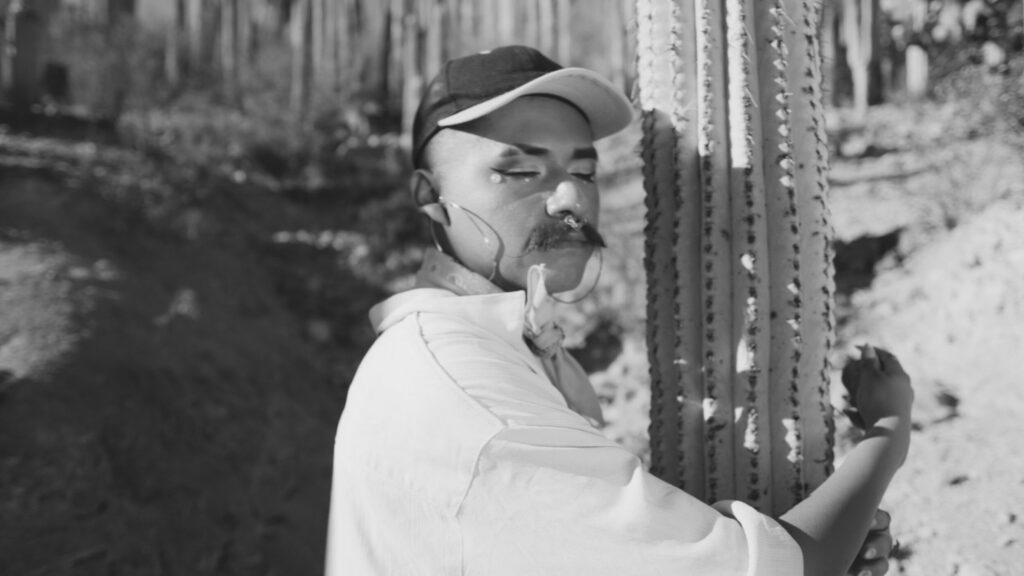
Amoxtli is the collective work of twenty people, from technicians to artists, writers, translators and cinematographers; a careful collection of their voices and subjectivities. “It is important for me to recall their names because they are really important in the project and in the process: the protagonists are Lo Coletti, Xaneri Damian, H., Gato que pinta, Daniel Engels, and the voices that you hear mostly are these voices from Yve Lizra, Shakti Aniorte, Gabriela Fuentes Miranda, Aneth, and my own voice. The music, for instance, is Mahesh Batsou’s and Serge Ghazale’s, mostly. Although I also did some sound design”, Vir Andres Heras told me.
“They all have their own projects,” he went on. “For example, Daniel Engels, who is the first one that I met, has a project called Prietologias. Prieto means brown, and the termination -logias means something like philosophy. My intention in inviting Dani was to discuss racism in the LGBT community in today’s Mexico and depart from there to have a broader communal reflection on what it means to be LGBTQ in Mexico today and also what it meant [in the past]. Because we have a similar history to Western countries, but we also have a really different one. It is interesting that you are coming from Greece. As people who live in the West thought, we already have this image of an ancient queer Greece or an ancient queer Roman Empire. But we don’t really get to have this version of the queer or homo-social atmosphere in pre-Hispanic history in Mexico because, like most of the indigenous culture, it has been erased and the LGBTQ history inside this is even more erased.”
Vir adopts the term ‘dissident’ to articulate the identities of those who worked alongside him. The term is useful because it points to a deviation from different kinds of norms: “There is a norm in the society, but then there is also a norm within the LGBTQ world, and these people are not part of both of these norms.” Referring to the collaborators of Amoxtli as a dissident group is fitting, as each brings distinct subjectivities, embodied histories, and forms of knowledge.
Xaneri, one of the individuals featured in the film, serves as an example: “She is an indigenous transgender woman from the state of Oaxaca. There, you have one of these millennial identities, which are called Muxes. In the indigenous cosmovision of Mexico, you had men, women and this third gender called Muxes. Xaneri is part of this community that has been surviving,” explains Vir. “Even in today’s Mexico, within the LGBTQ community, this kind of identity is at the same time celebrated in some spaces and also really vulnerable or violated in other spaces. As much as we have a big story of colonisation in Mexico, we also have a big history of racism and segregation. The more fair-skinned or white you are, the more privileged you are and seen as beautiful, and the more brown or black you are, the more excluded you are from this kind of appreciation. This is something that really interests me, because I am in the middle of a lot of these questions as a Mexican who has immigrated abroad and who is also a racialised person, but still with like a big privilege of being light-skinned and being educated and being able to have this discussion with you in English among many other things, right?”
ON MOTHERLANDS AND MOTHERTONGUES
The word diaspora comes from ancient Greek. Dia- suggests a separation, a division and the verb speirein means to scatter, but also to sow, to plant seeds by scattering them on the earth.
“When I finished this film”, Vir continues, “I also realised how far I was. My own path had led me far from my homelands, and this is how I felt close to the Chicana writers and to the Chicana ways of imagining what it is to be Mexican-American.”
The first part of Amoxtli includes shots of New York City, of a neighbourhood called Jackson Heights. The first time Vir went there, it was because he was visiting the mother of a boyfriend from Venezuela. “It was incredible. It really felt like walking in a part of Mexico, or walking in a dream, because it was full of Mexican people. All of the stores were Mexican-owned, you could hear Spanish in the street, but it had this really New York architecture to it because you have the metro, aerial metro, and you also have these bridges”, the artist recalls.
“I wanted to go back to this place to start the story of Amoxtli because even though I am a Mexican living in Europe, somehow, this place in New York reminds me of home because it’s full of diasporic people, so even though I never lived there, it feels like home. There are some places that you’ve never been, or you’ve been only once, and they feel like home. I didn’t want Amoxtli to start in the place where I was born — not everything has to be ancestral in that way. The ideas of identity are related to a kind of affection and belonging that a place can make you feel, in a way.”
Languages change fluidly throughout the film, appearing in descriptions and voice-overs. Translation remains partial and unfolds like an open process; it is never fully settled into a single, clear meaning: “The film could not be described or could not be narrated in only Spanish because that is not what I am today. I don’t speak only Spanish. And then speaking only in English would mean, for me, an exercise on what it means to use only English, to put my work in service to the Anglo-world or Anglosphere, which we are already doing by having this interview. And then the third, using only French, which is the language in which I feel most comfortable today.”
He decided to work with people who used English, French and Spanish every day, but at different levels and with different familiarity. Working with different translators meant exploring the idea of the serpent camera, because the geographic specificity of the narration remains unstable and elusive: “Gabriela Fuentes Miranda is from Colombia and lives in France, so her accent is Colombian French and her English is more like a third language. Yve Lizra is Mexican-American. You can feel the accent of her parents in her way of speaking Spanish. Her French has this American way of pronouncing some words. Shakti is Mexican, but she was born in France. Her Spanish has something French in it.”
“We want to tell something together even though it’s hard.”
“All these people came together with a lot of respect and love, but also with a lot of struggles and a lot of differences and incomprehension from one another. Trying to create a work out of different positions is really complicated, and it really puts you in a place of vulnerability as a filmmaker. You don’t want to hurt anybody’s feelings, and yet you have to create a consensus to make the work come to life.”
“Ariella Aïsha Azoulay, who is a filmmaker and philosopher, talks about the idea that when you do a film you are also inheriting the violence that it embodies to be a filmmaker or someone who is holding a camera. Because when you hold a camera, you are also holding power.”
Vir continues: “In the end, it is my responsibility, and that’s part of why sometimes I feel like a wizard, someone who is also dealing with magic. There is no perfect answer for this, but you have to be able to listen and to be sensitive about the energies that are moving around, in order to create something out of these frictions and these proofs of love, because the fact that they are in the movie is, for me, already a proof that we want to tell something together even though it’s hard.”
ANIMAL WAY OF DIRECTING
“I started to think of the screens like parts of a body that are floating in space and to think of these installations as a magical body in relation to this image of a goddess in the Aztec mythology, Cōātlīcue. Her body is made out of a lot of different parts of other gods and goddesses that she, or he, or they, introduced to their body because they changed sex and gender so they could accommodate parts of other human beings and gods according to what they were feeling like. So, in a way, for me, this installation is like the body of this goddess that is constantly transforming. And let’s say her main animal presence is the snake.”
“This idea of the camera serpent is a way to think about a camera that is not only my vision. It’s not only the vision of the director of photography. It’s not only the vision of the people in front of the screen either. It’s not only the vision of the narrators, but it’s a vision that is almost ritualistic and animalistic. I like this idea of the serpent as a deity that moves also in the landscape and which is summoning another kind of perception.”
Although in the planning of the film, certain outcomes were anticipated through the framework he created, he avoided guiding his performers excessively in order to avoid “directing too much”. The underlying question, however, lies precisely in the ambiguity of this threshold: What constitutes “too much” guidance?
“I am actually against what it means to be a director. I like to think of my work as also trying to not direct, even if you have to do it at some point. I think for me, it’s again the idea of finding an animal way of directing because it’s not human anymore, it’s other. It’s like a ritual connected to how you choose these locations and how they drive your creative process.”
“I think the most important place in this film is the ruins and the desert, which are kind of in the same place, and they are in the state of Puebla in Mexico. This landscape of the desert is really appealing to me because it’s the place where humankind, indigenous people discovered how to domesticate avocado, tomato, corn, chocolate, chilli pepper and many other species of vegetables and animals.”
“The ruins are special because we don’t know yet who the people inhabiting them were. We only know some rituals that they liked. For example, in this place called Cantona, where the ruins are, there was a tradition of mutilating your own genitals, men and women, in order to transform your body and become other. This we know. We also know that when they were doing this, they were consuming these psychedelic cacti in order to have communication with the spirits. It was crazy for me to imagine a society where you actually modify yourself, your own body and your own identity in connection to the spirits, even though today it seems violent against yourself. I like this idea that you could modify yourself.”
“I shared this story with the performers. I know it resonates with them because half of them are transgender and half of them are non-binary. What does it mean to reconnect with this idea of transforming your own body and gender and individuality, not only from, let’s say Stonewall in the United States but also from your own history in Mexico?”
ON RESPONSIBILITY AND ARTEFACT 2026
What Vir decided to highlight in discussing positionality in relation to his practice is the idea that position is not a permanent state. One of our first discussions during Artefact included his upcoming French citizenship exams — and their occasional absurdity. “I think the question of positionality is really present in my most recent questioning and practice. Because I would say that sometimes, the position you were in at some point, you are not anymore. Sometimes it fluctuates and transforms into something else. It doesn’t mean the same thing for me to have done a project like Amoxtli as a Mexican artist as it would have meant to have done it now that I will be French. It has to do with nationality, with cultural legitimation of what you are as an artist and of the means of production. For instance, in my next project, I will be working with Jean-Paul Gaultier, a fashion brand. What does it mean to work with this institution as an artist? But then, if I don’t do this or if I were not showing my work in STUK, then it also means that I am gatekeeping. You don’t want to gatekeep, and you don’t want to take the position of somebody else. This is why it is important to question your own position every day, because it is really shifting by some small things.”
Isn’t it stressful, this never-ending re-evaluation of your position, I asked. “I think it is,” Vir confesses, “but I also think that it is a matter of responsibility.” He elaborates:
“It’s not all about race and let’s say sexual orientation or let’s say the economic class that you were born into. It is also about what you are becoming.”
Vir now teaches at a French art school and acknowledges the privilege of this position. He is acutely aware that his institutional role may afford him access to opportunities that remain less available to others, including some of his friends who might not be queer or who do not share his experiences of migration. He is also aware of the responsibility to advocate for fair remuneration as an artist since it can help shape conditions in which those with less agency are better able to claim and access their rights. “Otherwise, it’s pure gatekeeping.”
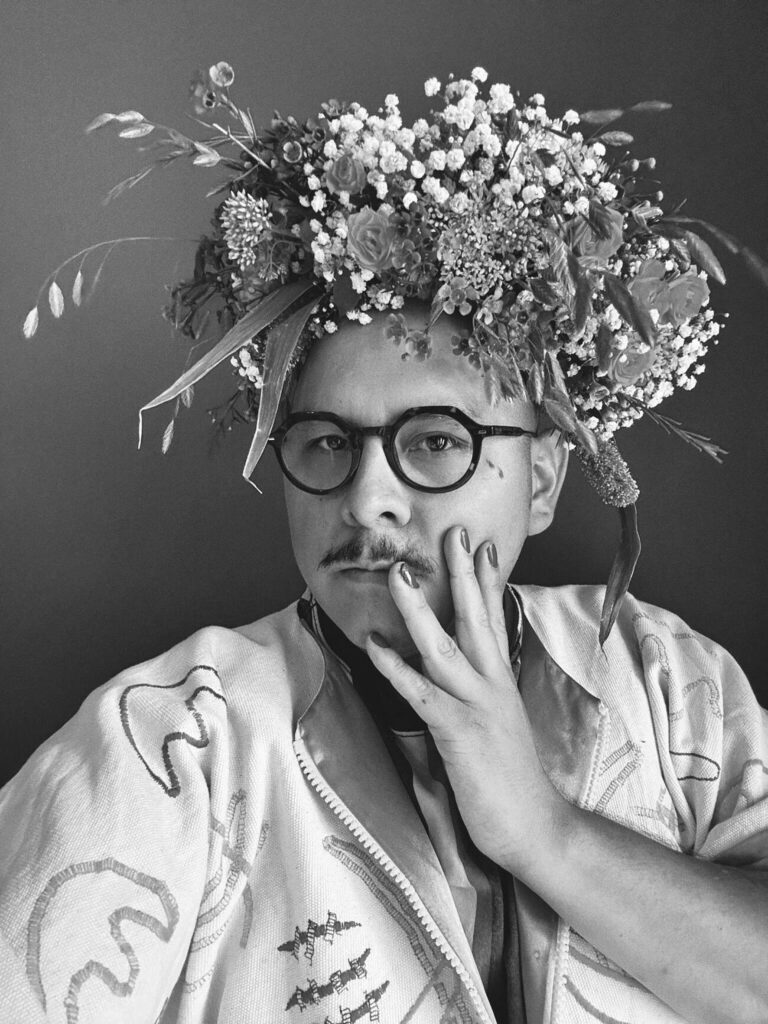
“I was really happy to be part of Artefact. Because, as I was telling Karen [Verschooren, Artefact’s curator], her curating is special. She is super smart, and also super smart to not make it super intellectual. We were discussing this, and she was talking about the privilege of not having to justify her work with ten million intellectual references. I think she’s really conscious of it. And how it can be radical to show work this way. It feels simple, but it’s not.”
“It’s liberating for me, because it is tiring when your work is only presented through the loop of your minority condition, or gender condition, or whatever.”
“It’s not the case in Artefact. There, it was more about sensation and what it does to the body. I feel like it is a sort of evolution for my work to be displayed in this way. Sometimes, curators, in order to defend your work as a minority artist, have to explain a lot. And to see that someone can showcase the work in this way, without having to explain too much, it shows that we are in the right place of the dialogue. Future discussions could include other stuff, like sounds or the technique or even, like, post-positionality, right? Which is something that I am also interested in, in how the conversation of positionality will evolve, which is super interesting. But I think that we are also at a point where we need to push further.”
What I find particularly compelling in Vir’s work is the depth of his awareness of context, both quite literally — as in surroundings — and metaphorically. While he does not seek to offer definitive answers to art’s complex questions, he does not shy away from addressing them with kindness and responsibility. Amoxtli is an artwork that, without evading the responsibility it carries within an institutional framework, generously offers its viewer a space of solace; an opening through which one might remain hopeful and allow oneself to flourish by taking care of the emotions it evokes, from love to sadness to anger — and then back to love again.
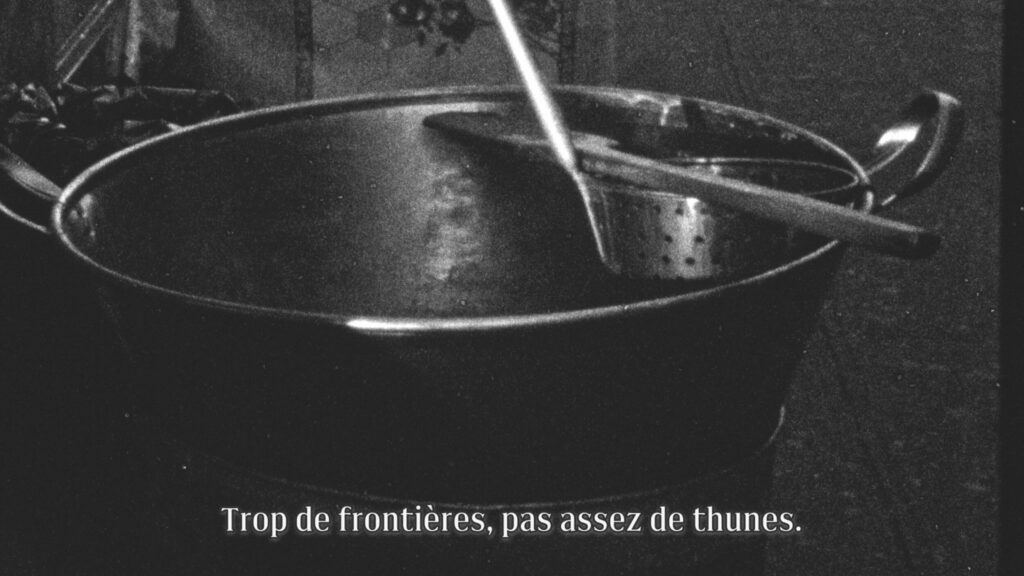
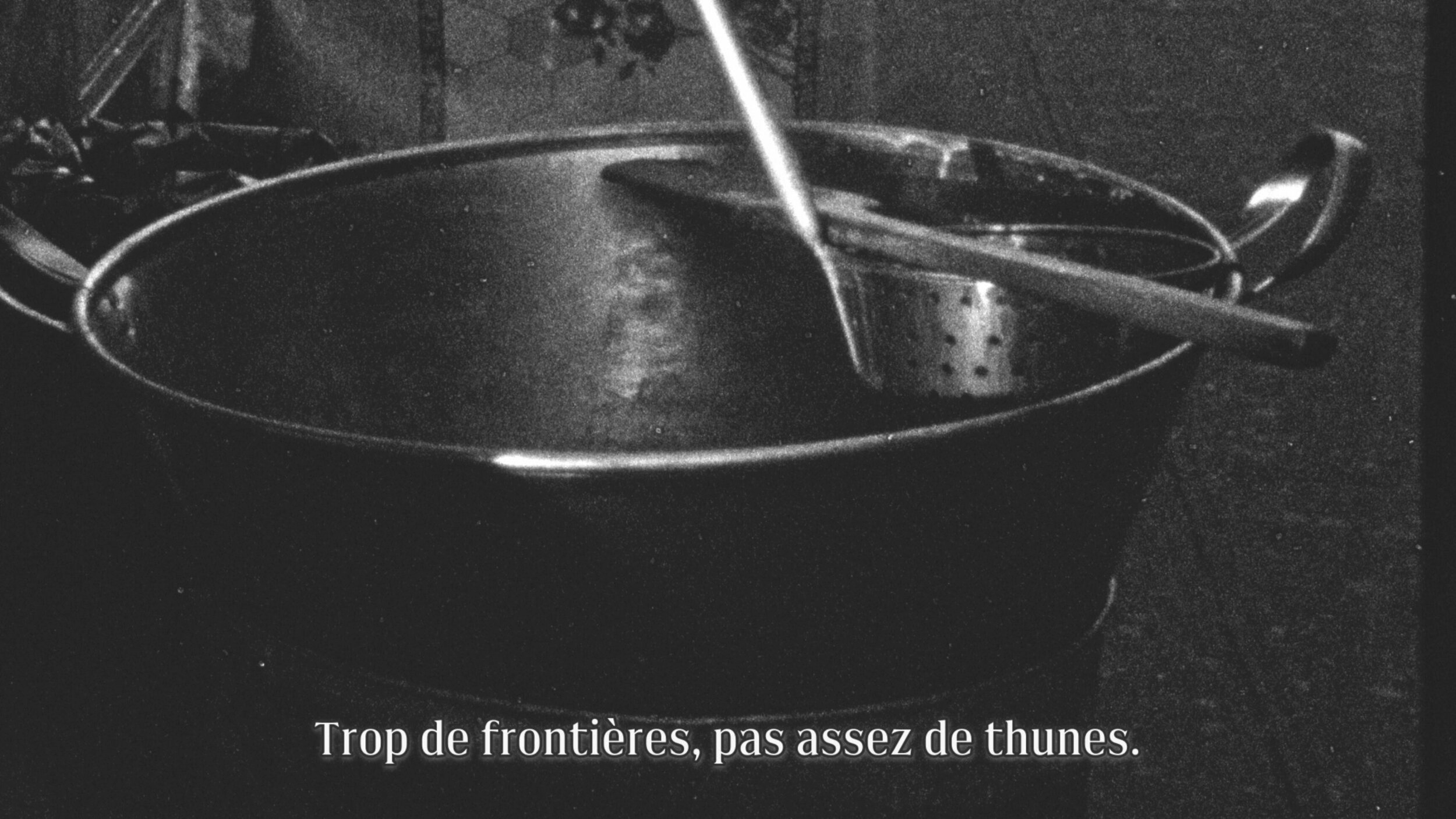
Everywhere My Brown Shoe Steps. Vir Andres Hera. 2024. From the installation Amoxtli. Production Chinampa, CNAP (Centre National des Arts Plastiques). Courtesy of CHINAMPA.
This piece was originally published in Issue 1 of the print edition of Ordinary Matters magazine.

Leave a Reply