Content Warning: Genocide, War-Crime
What do you do when you have already tried everything in your power to end a genocide and still don’t succeed? After two years of organising protests, cultural events, social media campaigns, fundraisers, and countless hours and bursts of energy, I feel tired. Working within the movements for Sudan and Palestine, my focus has always been positive, constructive, hopeful. The whole point of activism is to act so that something can be different. We come together to change things, to build different worlds, worlds that we believe are possible.
And yet, the counterrevolutionary war in Sudan rages on. Israel continues its genocide in Gaza and expands its occupation of Palestine, Lebanon and Syria. The illegal war on Iran escalates. Our governments in Europe remain active contributors to foreign crimes, and exported imperial violence returns. Brussels train stations are now being patrolled by the military, and Frontex has already joined them on the streets. The violence that we see from Sudan to our own neighbourhoods is incredibly difficult to witness. It is heartbreaking to see that people in so many places are forced to flee their homes, unable even to bury their loved ones, dying of hunger. We live in a world where people are completely stripped of their humanity, and it is part of a system that profits from suffering. In Sudan, Europe is actively externalising its border regime, preventing people from fleeing to Europe before they even reach its shores. All in the name of security. The UAE is extracting gold and farmland, paying the RSF to commit genocide for control over regions rich in minerals. Despite all our efforts, the situation seems to be getting worse.
“What are the tyrannies you swallow day by day and attempt to make your own, until you will sicken and die of them, still in silence?” (Audre Lorde, “Transforming Silence into Language and Action”, 1977)
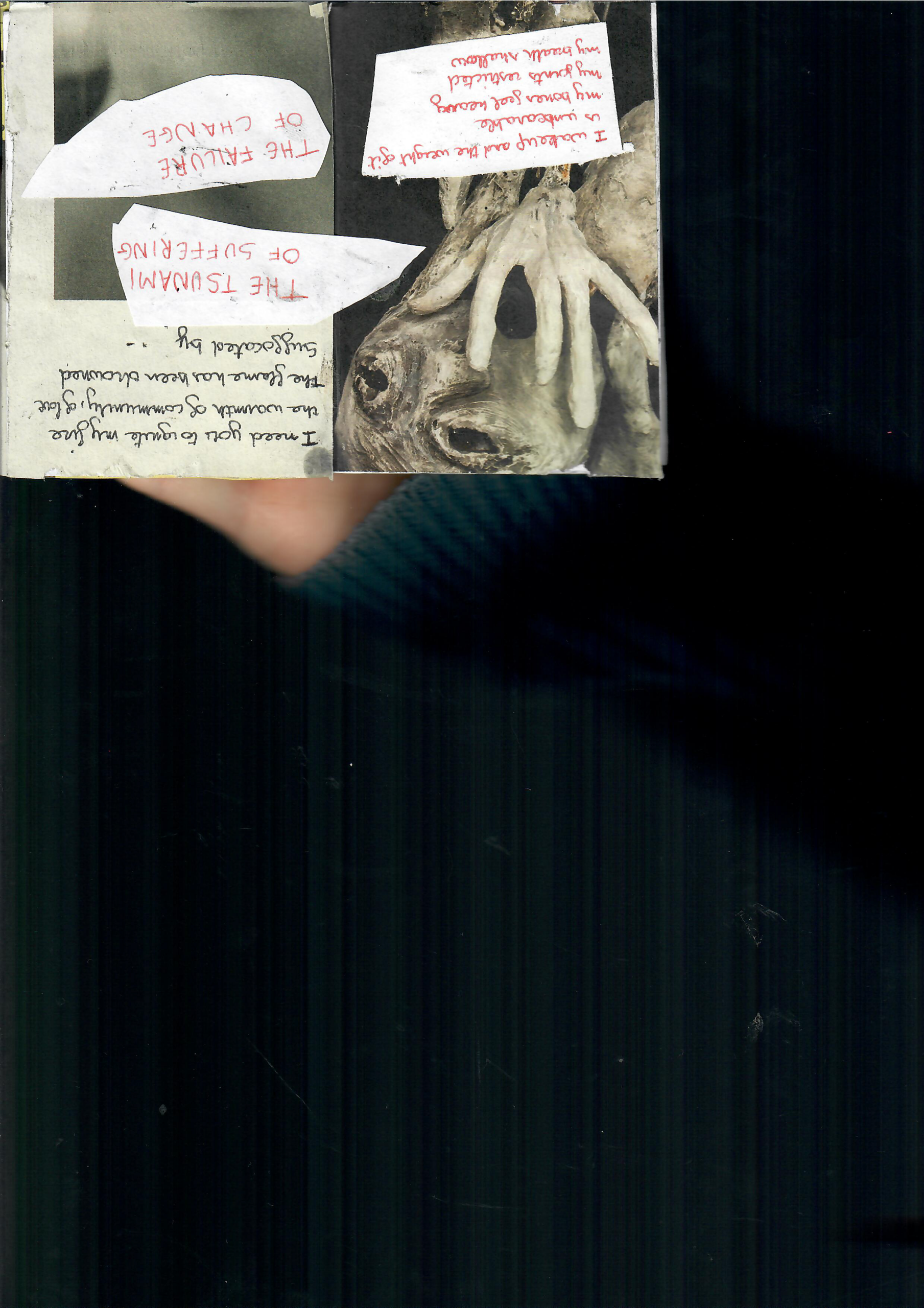
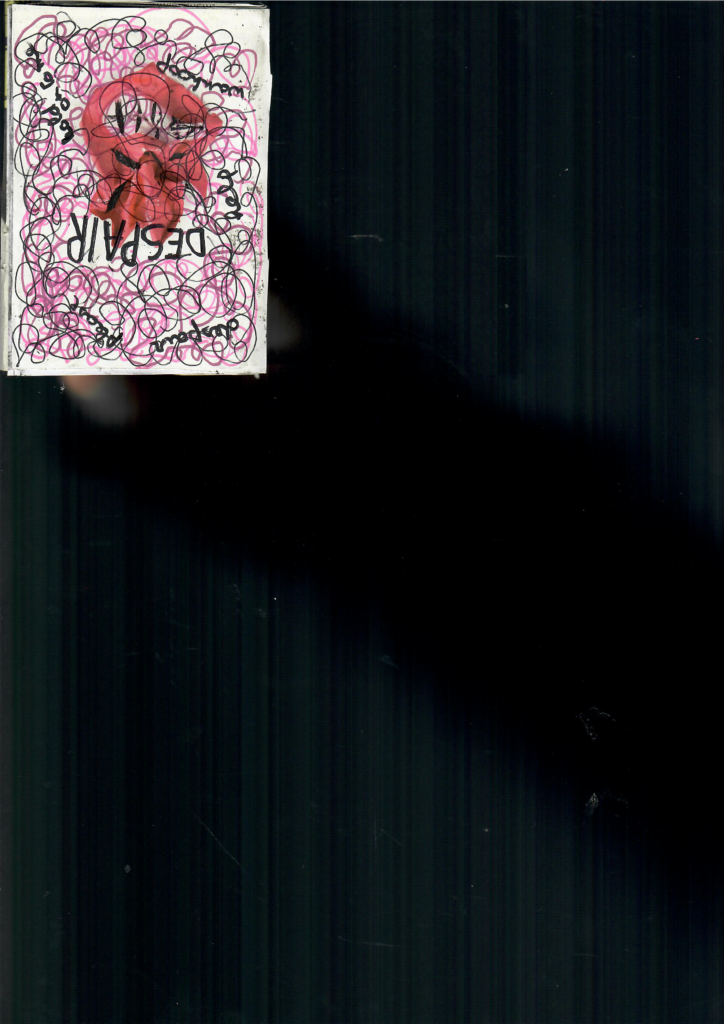
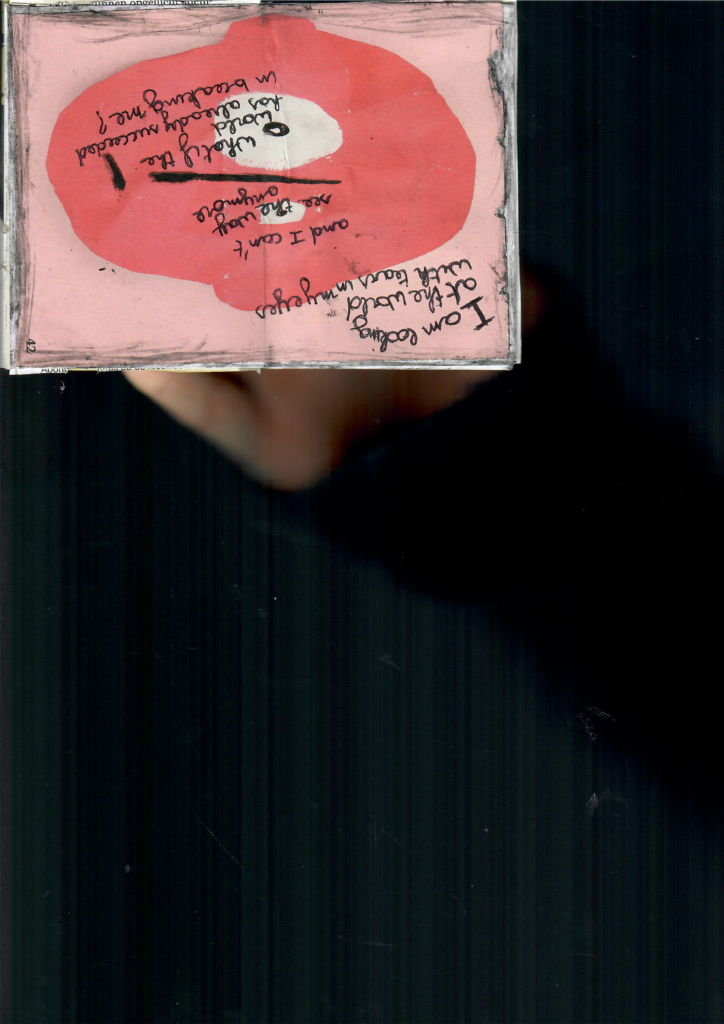
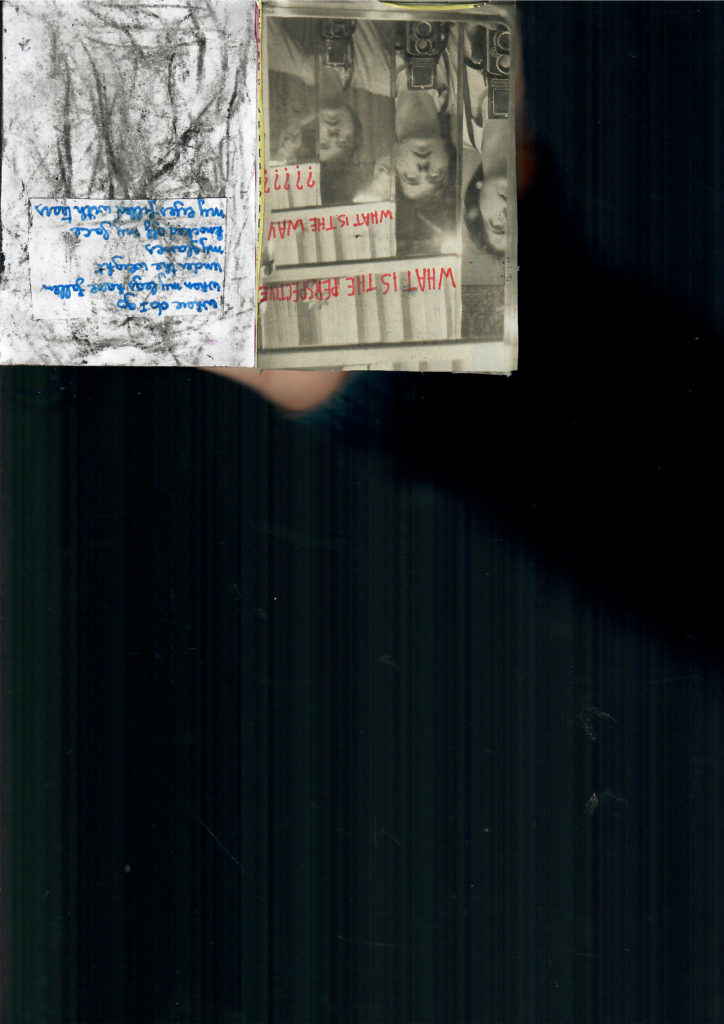
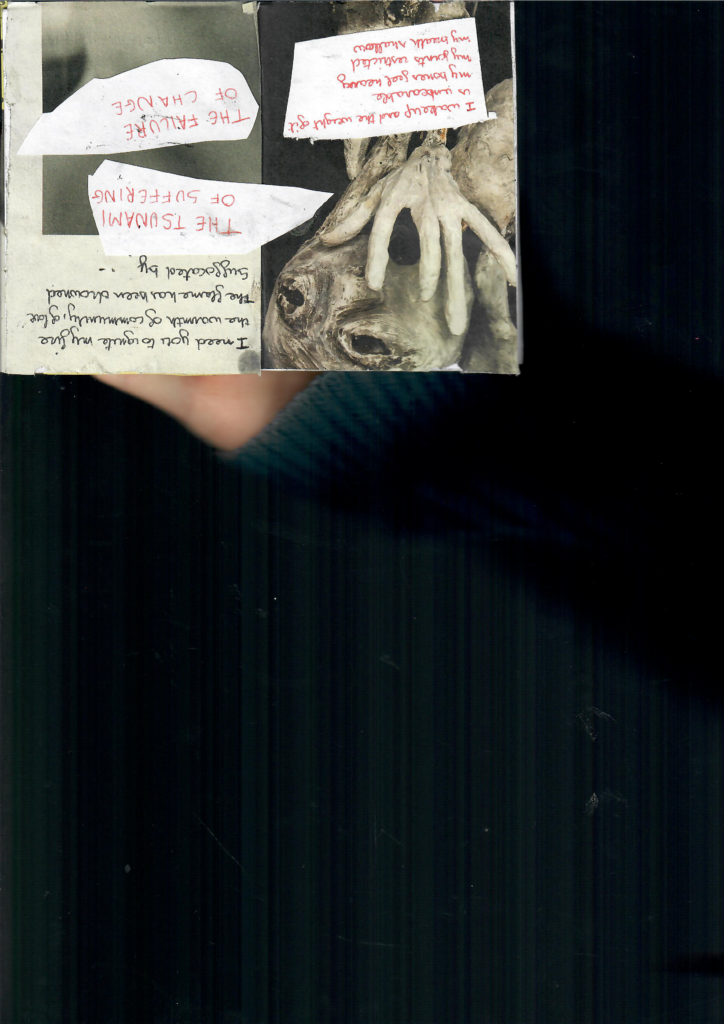
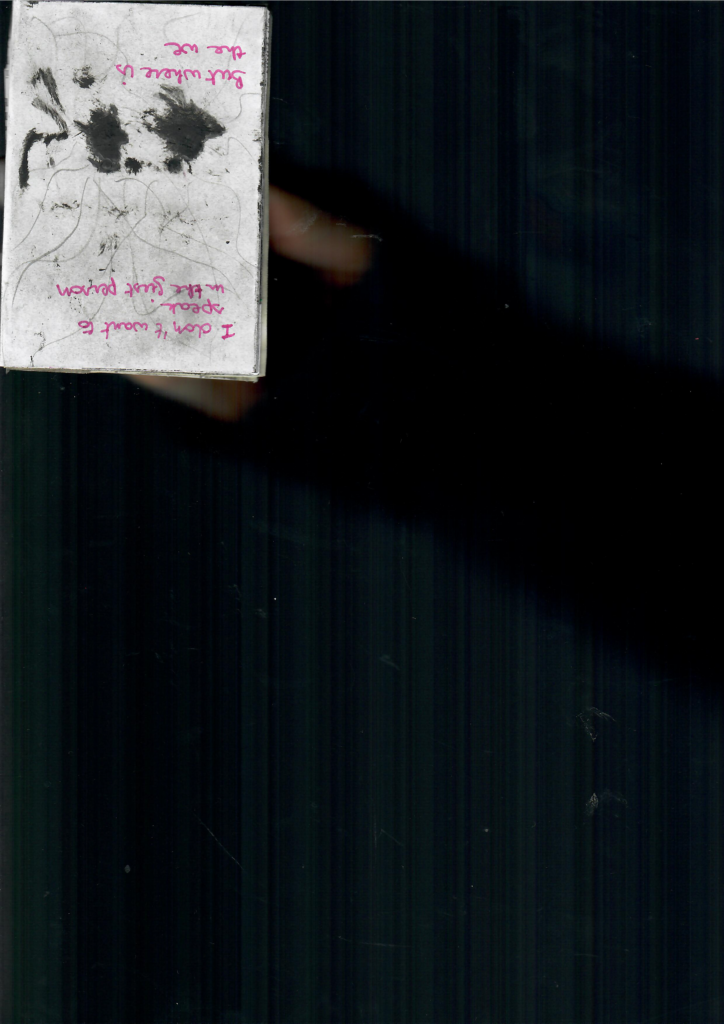
Making zines, for me, is a meditative process. It provides an opportunity to look inwards and give expression to the feelings stuck in my body. The zines I make are mostly not premediated. They are an expression of a specific moment in which I allow myself to feel and explore. Often, those unproductive, non-constructive, negative emotions, the ones you don’t want to release in an already stressful meeting, find their way into the zines I make. They finally get some space to be. Zine-making is a form of journalling, mixing words with images, with more freedom to express different emotions in different ways.
This set of zines came into being at a time when activist burn out enveloped me completely. After months, and then years, of organising, giving everything I had to give, I was tired beyond my wits. A lyric by Jorja Smith lodged itself in my thoughts constantly: “You can’t look at the world with tears in your eyes.” At first, it was a pick me up, an impulse to pull myself together. When that failed, it became a requirement I was unable to meet. What if I am indeed looking at the world with tears in my eyes? This point reminded me of a line in Audre Lorde’s poem Contact Lenses: “I see much better now / and my eyes hurt” (1978, 94). Both Jorja Smith’s lyric and Audre Lorde’s line focus on the connection between pain and our ability to see. The pain of witnessing or experiencing loss can blur our vision, taking away the clarity of a given situation. From my position, this pain comes from witnessing empire’s destruction and our inability to end it.
In our movements, we work hard to understand this violence and the systems behind this. We analyse in order to dismantle. Understanding guides us to act differently. This path deepens our understanding of oppressive systems and the very intimate, personal tragedies they create for people. Understanding Imperialism is not just a matter of political science; it is houses destroyed, families torn apart, and the lives of loved ones lost. After years of understanding, after years of trying different tactics to achieve something, it becomes difficult to energise oneself: vision gets murky, and fatigue blurs it even more.
My whole body hurt. My lower back felt constricted and tense. My hip felt like it had been pulled on and almost ripped out. Every part of my body felt heavy. It was taking me over, drawing my attention. It was a spiral, a weight I could not shake; it covered me. The knowledge that was so important for me to acquire, to inform my actions, and to drive me toward another world, became a weight on my shoulders that I was unable to carry.
How else should one react to a genocide that is livestreamed to their phones? These emotions are a normal reaction to a world on fire. They are a reminder of my own humanity, showing that the dehumanisation of Palestinians, of Sudanese, Lebanese, Congolese and people made refugees has not worked. The violence that different imperial powers like the EU, Israel, UAE and USA perpetrate is not normal; it is not acceptable. It is horrifying, and the emotions that arise from witnessing this violence confirm that fact.
References:
Azoulay, Ariella Aisha. 2021. Potential History. Verso Books.
Lorde, Audre. 1978. The Black Unicorn: Poems. W. W. Norton & Company.
Lorde, Audre (1997). The Cancer Journals: Special Edition. Aunt Lute Books.
Smith, Jorja. 2018. “Goodbyes.” Track 10 on Lost And Found. Famm.
This piece was originally published in Issue 1 of the print edition of Ordinary Matters magazine.

Leave a Reply